
Coordinate geometry, also known as analytic geometry, offers a bridge between the realms of algebra and geometry. It provides tools to geometrically interpret algebraic equations and, conversely, to algebraically interpret geometric figures. Let’s delve into the fascinating world of coordinate geometry.
A Brief History of Coordinate Geometry
The Cartesian System
The foundations of coordinate geometry were laid by the French philosopher and mathematician René Descartes in the 17th century. The Cartesian coordinate system, named in his honor, serves as the primary framework for modern-day coordinate geometry. By introducing the use of coordinates, Descartes enabled mathematicians to describe geometric shapes with algebraic equations.
Evolution Over Time
Over the centuries, coordinate geometry has expanded beyond the Cartesian plane, encompassing other systems like polar coordinates. This evolution has enabled broader applications in various fields, including physics, engineering, and computer graphics.
Check Out Our Online Math Calculators and Tools
Basic Elements of Coordinate Geometry
Points and Coordinates
The fundamental unit in coordinate geometry is a point. Every point on the Cartesian plane corresponds to a unique pair of real numbers, its x and y coordinates. This pair is written as an ordered pair, (x, y).
Lines and Equations
Every line can be represented algebraically using an equation of the form y = mx + c, where `m` is the slope of the line, and `c` is the y-intercept. The slope offers a measure of the line’s steepness, while the intercept indicates the point where the line crosses the y-axis.
Graphing and The Quadrants
The Four Quadrants
The Cartesian plane is divided into four quadrants by the x-axis and y-axis. The top-right quadrant is the first quadrant, where both x and y are positive, followed by the second, third, and fourth quadrants as you move counter-clockwise.
Plotting Points
To plot a point, you start at the origin (0,0), move x units horizontally (right if positive, left if negative), and then y units vertically (up if positive, down if negative). The journey from algebraic representation to a visual point on the plane is the essence of coordinate geometry.
Noteworthy Concepts in Coordinate Geometry
The Distance Formula
An essential concept in coordinate geometry is the ability to calculate the distance between two points. Using the Pythagorean theorem, the distance `d` between two points (x1, y1) and (x2, y2) is given by:

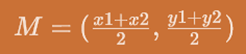
The Midpoint Formula
Finding the midpoint between two points is often necessary, especially in problems involving line segments. The midpoint `M` between the points mentioned above is:
Try Out Our Online Calculators
Applications of Coordinate Geometry
Coordinate geometry has diverse applications, impacting several domains.
Engineering
Engineers frequently use coordinate geometry in design and analysis, ensuring structures and systems function as intended.
Astronomy
Astronomers map the position of stars using a system not too dissimilar from the Cartesian plane, albeit more complex due to the three-dimensional nature of space.
Computer Graphics
Every visual element on a computer screen has coordinates. When playing video games or watching animations, you’re witnessing the power of coordinate geometry in action.
In Conclusion: The Beauty of Synthesis
Coordinate geometry epitomizes the beautiful synthesis of algebra, the language of abstract reasoning, and geometry, the language of shapes and space. It provides tools that are indispensable to modern science, engineering, and technology. As you further explore mathematics, you’ll find coordinate geometry illuminating your path, offering insights and solutions to complex problems.