
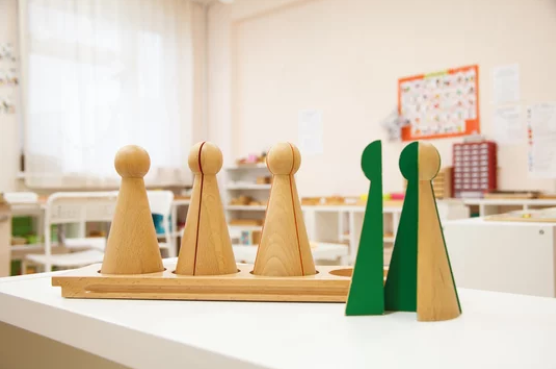
Fractions are a fundamental aspect of mathematics that play a crucial role in cognitive development, particularly during childhood. Among the various types of fractions, half fractions are often the first introduced in educational settings. This blog post delves into how understanding half fractions supports cognitive development in children, providing insights into their significance in learning, problem-solving, and everyday life.
The Importance of Fractions in Cognitive Development
Understanding fractions is essential for a child’s mathematical foundation. As children progress through their education, they encounter increasingly complex mathematical concepts. Grasping fractions, particularly half fractions, helps children build critical thinking skills and develop a solid understanding of numerical relationships.
Half fractions, represented as \( \frac{1}{2} \), signify the division of a whole into two equal parts. This concept is not just about numbers; it introduces children to the idea of equivalency, comparison, and proportionality. The ability to recognize that two halves make a whole fosters logical reasoning and enhances cognitive abilities.
Building a Foundation: Early Introduction to Half Fractions
Research has shown that early exposure to mathematical concepts significantly impacts cognitive development. Introducing half fractions in preschool or early elementary education lays the groundwork for future learning. Children begin to understand basic mathematical principles, such as addition, subtraction, and even multiplication, by manipulating half fractions.
For instance, consider the following scenarios:
- Sharing Food: When a child is asked to share a pizza with a friend, they must recognize that cutting it in half means each person receives \( \frac{1}{2} \) of the pizza. This real-world application of half fractions engages children’s reasoning skills and highlights the practical relevance of math in everyday situations.
- Measuring: In cooking activities, children learn to use half fractions when measuring ingredients. For example, if a recipe calls for \( \frac{1}{2} \) cup of sugar, understanding this measurement enhances their comprehension of fractions while developing essential life skills.
Half Fractions and Spatial Awareness
Understanding half fractions is intricately linked to spatial awareness, an essential component of cognitive development. Spatial awareness refers to the ability to visualize and manipulate objects in space, which is critical for tasks ranging from simple puzzles to complex geometric reasoning.
When children learn about half fractions, they often engage in activities that require them to visualize shapes and sizes. For example, cutting a rectangle in half or dividing a circle into two equal parts challenges children to think about how these shapes interact. This spatial reasoning is foundational for later math concepts, such as geometry and measurement.
Enhancing Problem-Solving Skills
Cognitive development is closely tied to problem-solving abilities. Understanding half fractions helps children tackle mathematical problems more effectively. Here’s how:
- Equivalence and Comparison: Learning about half fractions allows children to explore equivalency. They can begin to understand that \( \frac{1}{2} \) is equivalent to \( \frac{2}{4} \) or \( \frac{3}{6} \). This understanding strengthens their ability to compare fractions and develop a more nuanced comprehension of numerical relationships.
- Real-World Applications: When children apply half fractions to real-world scenarios, they enhance their problem-solving skills. For example, when faced with the question of how many \( \frac{1}{2} \) cups are needed to fill a \( \frac{1}{4} \) cup, they must use critical thinking to arrive at a solution. This process encourages them to think creatively and analytically.
Promoting Cognitive Flexibility
Cognitive flexibility—the ability to adapt one’s thinking and approach to different situations—is a crucial aspect of cognitive development. Understanding half fractions fosters cognitive flexibility in several ways:
- Multiple Representations: Half fractions can be represented in various forms, such as numbers, visual diagrams, or even through physical objects. Children learn to switch between these representations, which enhances their cognitive adaptability. For instance, they might visualize \( \frac{1}{2} \) of a shape while simultaneously calculating it numerically.
- Abstract Thinking: Grasping the concept of half fractions encourages children to think abstractly. They begin to understand that numbers can represent quantities, relationships, and concepts beyond mere counting. This shift in thinking is vital for higher-order mathematics.
Encouraging a Growth Mindset
Fostering a growth mindset is essential for cognitive development. Children who believe their abilities can improve through effort are more likely to embrace challenges. Understanding half fractions supports this mindset in several ways:
- Trial and Error: When children work with half fractions, they often experiment with different methods of solving problems. This trial-and-error approach encourages resilience, as they learn that mistakes are part of the learning process.
- Celebrating Progress: Recognizing their ability to master half fractions gives children a sense of accomplishment. This success fosters motivation and encourages them to tackle more complex mathematical concepts in the future.
Integrating Half Fractions into the Curriculum
To maximize cognitive development, educators should strategically integrate half fractions into the curriculum. Here are some effective strategies:
- Hands-On Activities: Engaging children in hands-on activities, such as cutting shapes or using fraction tiles, allows them to explore half fractions in a tangible way. These activities reinforce their understanding through visual and kinesthetic learning.
- Storytelling and Real-Life Contexts: Incorporating storytelling or real-life scenarios can make learning half fractions more relatable. For example, a story about sharing food or dividing items can help children grasp the concept in a meaningful way.
- Games and Puzzles: Educational games and puzzles that involve fractions can make learning fun while reinforcing cognitive skills. Games like fraction bingo or interactive online tools can engage children and promote active learning.
Understanding half fractions is a vital step in cognitive development for children. This foundational concept not only enhances their mathematical skills but also supports critical thinking, spatial awareness, and problem-solving abilities. As educators and parents, fostering a strong understanding of half fractions will empower children to approach more complex mathematical challenges with confidence and resilience. By integrating engaging activities and real-world applications, we can create a rich learning environment that nurtures cognitive growth and a lifelong love for mathematics.