Here, we will introduce the idea of the least common denominator or LCD. LCD is an idea that will be used in comparing fractions, and adding and subtracting fractions. The LCD is the smallest number that both 4 and 3 will divide into evenly. 12 is the LCD for the fractions 3/4 and 2/3 because the denominators 4 and 3 divide evenly into 12.
Then, write each fraction with the common denominator 12 . The illustration shows that 3/4 is equal to 9/12 and 2/3 is equal to 8/12. Once each fraction is renamed with a common denominator, you only have to compare the numerators - the larger the numerator the larger the fraction.
See the program RENAME IN HIGHER TERMS for more information on renaming fractions.
One way to find the LCD is to see if the smaller denominator 3 will divide evenly into the larger denominator 4. If not, then multiply the larger denominator 4 by 2 to get 8. Will the smaller denominator 3 divide into 8? No, so multiply the larger denominator by 3 to get 12. Will 3 divide evenly into 12? Yes, so 12 is the LCD for the denominators 3 and 4. If not, then multiply by 4, then 5, etc. until the smaller denominator divides into the product.
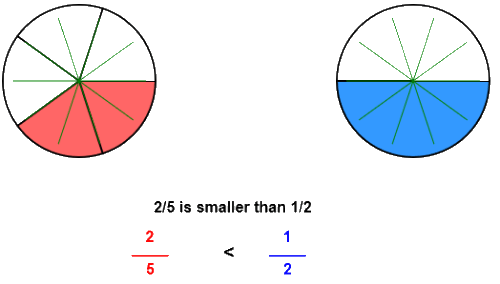
Also, thinking of the pictures of the fractions will help you decide which is the larger.
Choose the < (less than) button if you think the first fraction is smaller than the second, or > (greater than) if you think the fraction is larger. If correct, a number line showing the comparative distances of the two fractions will appear. Also, the number lines will show the two fractions with the LCD.
|